A brand new concrete driveway is a significant investment that enhances your property's curb appeal and functionality. However, its longevity and safety depend on one critical, often overlooked detail: proper slope for water runoff. Here on the Gold Coast, where we experience everything from gentle showers to intense subtropical downpours, getting the driveway slope right is not just a recommendation—it's an absolute necessity. Without correct drainage, your beautiful new driveway can quickly become a source of major problems, leading to water damage, safety hazards, and costly repairs.
In 2025, the standards for residential construction and landscaping are higher than ever, with a strong focus on effective water management. This comprehensive guide will walk you through why driveway slope is crucial, the industry standards you need to know, and how a professional concreting service achieves the perfect gradient to protect your Gold Coast home for decades to come.
Why Proper Driveway Slope is Non-Negotiable on the Gold Coast
Failing to plan for water runoff is one of the most common mistakes in driveway construction. The consequences of a flat or incorrectly sloped concrete driveway can be severe, particularly in our coastal climate.
Preventing Water Pooling and Safety Hazards
The most immediate problem with a poorly sloped driveway is pooling water. These stagnant puddles are more than just an eyesore; they create a slippery surface, increasing the risk of slips and falls. Over time, standing water can also lead to the growth of mould and algae, which not only looks unsightly but makes the surface even more treacherous. Furthermore, stagnant water is a prime breeding ground for mosquitoes, a significant nuisance for Gold Coast residents.
Protecting Your Home's Foundation
This is the most critical reason for proper slope. If your driveway slopes towards your home, it will channel rainwater directly to your foundation. Water intrusion can cause soil expansion and contraction, leading to immense pressure on your home's slab and foundation walls. This can result in cracking, shifting, and ultimately, severe structural damage that is incredibly expensive to repair. A correctly sloped driveway acts as the first line of defence in your property's water management system.
Avoiding Erosion and Landscape Damage
Uncontrolled water runoff can wreak havoc on your landscaping. Water flowing off the sides of a driveway can erode soil, wash away mulch from garden beds, and damage lawns. A properly designed concrete path or driveway directs water to a designated, manageable location, preserving the integrity of your surrounding landscape.
Maintaining the Driveway's Structural Integrity
Concrete itself is durable, but the sub-base beneath it is vulnerable to water. When water seeps through cracks or joints into the soil and gravel base, it can wash away the supporting material. This creates voids under the concrete slab, leading to sinking, cracking, and eventual failure of the driveway. A driveway that sheds water effectively is a driveway that lasts longer.
Compliance with Gold Coast City Council Regulations
Local councils have specific regulations regarding stormwater management. Property owners are responsible for managing water on their own land and are generally prohibited from directing concentrated runoff onto neighbouring properties or creating a nuisance on public footpaths. A professional concreting contractor on the Gold Coast will be familiar with these local requirements and ensure your project is fully compliant.
Understanding the Basics of Driveway Slope (Fall or Gradient)
In the world of concreting, the terms "slope," "fall," and "gradient" all refer to the same thing: the angle of the surface that allows water to flow from a high point to a low point. This is typically measured as a percentage or a ratio.
For example, a 1% slope means there is a 1-centimetre drop in elevation for every 1 metre of horizontal distance. This is often written as a ratio of 1:100.
- The Minimum Standard Slope: The generally accepted minimum slope for any external concrete surface is 1% (1:100). This is the absolute bare minimum required to prevent water from pooling on a perfectly smooth surface. The Ideal Slope for Gold Coast Conditions: Due to the high intensity of rainfall on the Gold Coast, most reputable concreters recommend a steeper slope of at least 2% (1:50). This means a 2cm drop for every 1m of length. This slightly steeper gradient ensures water sheds quickly and effectively, even during a heavy downpour, and provides a buffer for any minor surface imperfections. The Maximum Functional Slope: While a steeper slope is better for drainage, there is a limit. A driveway that is too steep can be difficult to walk on and may cause cars to "bottom out" or scrape. The maximum recommended slope for a residential driveway is typically around 15% (1:6.7), though this is reserved for very hilly properties and requires careful planning.
Planning and Calculating the Correct Slope for Your Driveway
Achieving the right slope begins long before the concrete mixer arrives. It requires careful planning and precise calculations. While a professional concreting company will handle this with sophisticated tools, understanding the process helps you appreciate the importance of expert execution.
Step 1: Determine the Drainage Point
The first and most important decision is where the water will go. The universal rule is to direct water away from all buildings. The most common drainage points are:
The Street: This is the most common solution, where the driveway slopes down from the garage to the road, allowing water to enter the public stormwater system. A Channel Drain: If the driveway naturally slopes towards the garage, a channel drain (or trench drain) must be installed in front of the garage door to intercept the water and pipe it away to a suitable outlet. A Garden Swale or Drainage Pit: On larger properties, water may be directed to a low point in the yard, such as a grassy swale or a dedicated drainage pit filled with gravel (soakwell).It is crucial to ensure your chosen drainage point complies with Gold Coast City Council rules.
Step 2: Calculate the Required Fall
Once the high point (e.g., the garage slab) and the low point (e.g., the kerb) are established, the calculation is straightforward. Let's use an example for a standard 12-metre-long driveway aiming for the recommended 2% slope:
Driveway Length: 12 metres
Desired Slope: 2% (or 0.02)

This means the end of the driveway at the street must be 24 centimetres lower than the start of the driveway at the garage. A professional uses a laser level to ensure this height difference is perfectly and consistently applied across the entire area.
How Professional Concreters Achieve the Perfect Slope
Calculating the slope is one thing; physically creating it in tonnes of wet concrete is another. This https://gregorygonq651.almoheet-travel.com/how-to-spot-quality-workmanship-in-concrete-projects is where the skill of an experienced concreting contractor becomes invaluable.
The process begins with site preparation and excavation. The ground itself is excavated and compacted to match the desired slope. This sub-base is the foundation of your driveway, and its grading is just as important as the concrete itself.
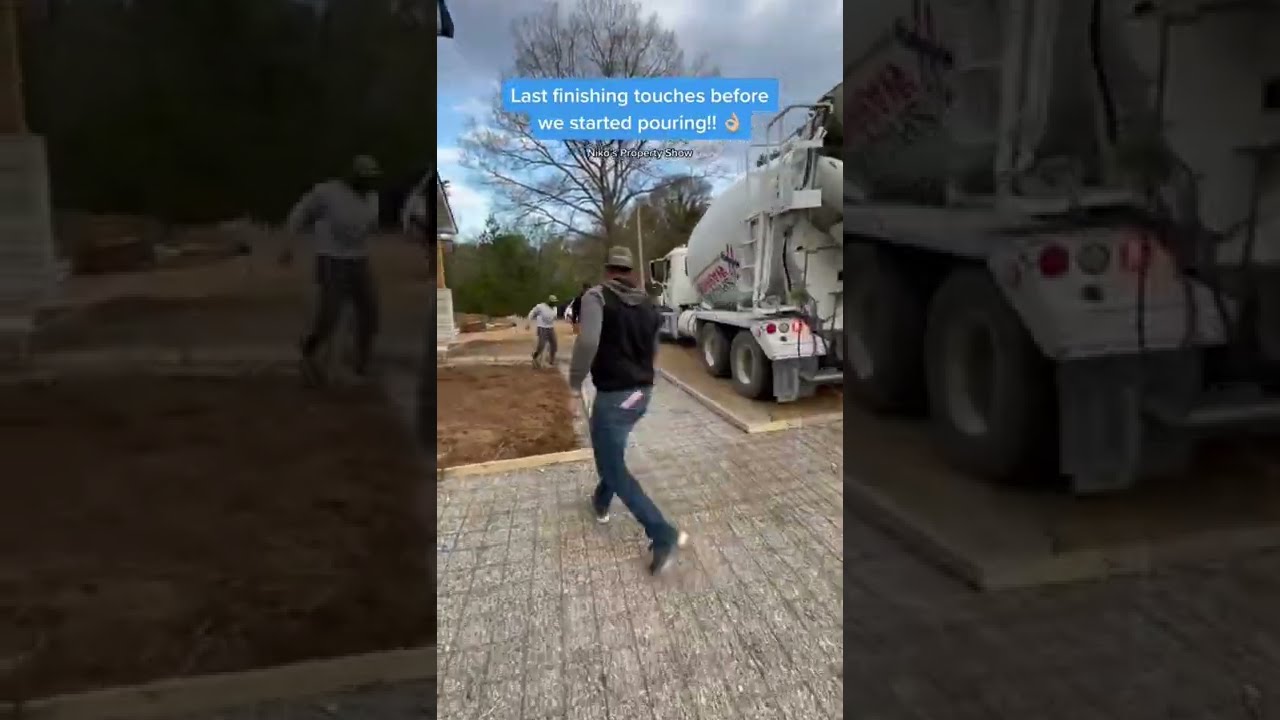
Next, formwork is set up. These are the wooden or metal boards that frame the driveway pour. The tops of these forms are set with extreme precision using string lines and laser levels to create the exact, unwavering gradient from the high point to the low point.

During the pour, concrete is spread out, and then a large aluminium straightedge called a "screed" is pulled across the top of the forms. This action levels the wet concrete to the height of the formwork, embedding the planned slope into the surface. Finally, finishing tools are used to create the final texture, whether it's a simple broom finish or a decorative exposed aggregate driveway, all while maintaining the crucial slope.
Advanced Drainage for Challenging Gold Coast Properties
Sometimes, a simple, uniform slope isn't enough. For properties with tricky layouts or steep inclines, a professional concreting company will incorporate advanced drainage solutions.
Channel Drains: As mentioned, these are essential for driveways that slope towards a building. They consist of a grated drain set flush with the concrete surface, which captures water and directs it away via underground pipes. They are a clean and highly effective solution.
Spoon Drains: These are subtle, concave channels formed into the concrete surface itself. They are often used on a wide concrete path or driveway to guide water towards a specific drain or side of the slab without requiring a separate grated drain.
Permeable Paving: A growing trend in 2025 is the use of permeable concrete. This environmentally friendly option allows rainwater to pass directly through the concrete into a specially prepared sub-base, reducing runoff into the stormwater system. While it has specific installation requirements, we expect to see more council encouragement for these systems in 2026 and beyond as a way to manage urban water runoff.
Conclusion: A Solid Investment in Your Property's Future
Properly sloping your concrete driveway is not a feature you can add later; it must be engineered correctly from the very beginning. It is the single most important factor in ensuring your driveway is safe, durable, and protects your most valuable asset—your home. By understanding the principles of a 2% slope and the importance of directing water away from structures, you are better equipped to have an informed conversation with your contractor.
Given the complexities of site preparation, accurate measurements, and council regulations, achieving the perfect slope is a job best left to the professionals. For a flawlessly executed driveway that can withstand the Gold Coast's climate and add lasting value to your property, always partner with a licensed, experienced, and reputable concreting service.
Gold Coast Concreting Experts
Shop 4/22 Bailey Cres, Southport QLD 4215, Australia
ph. (07) 5230 8851